Apple’s First Foldable iPhone Is Here: iPhone Duo Costs $1,999 — Who Is It Actually For?
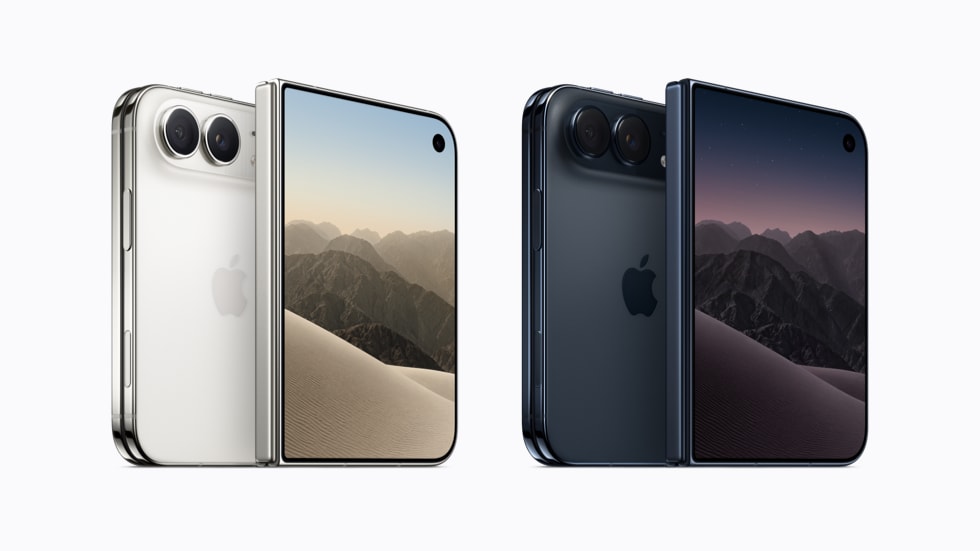
Apple has finally entered the foldable-phone market. The iPhone Duo starts at $1,999, opens to a 7.6-inch inner display, closes around a 5.4-inch outer display, and arrives in the U.S. and more than 70 markets on October 23 after pre-orders begin October 16.
The important question is not whether Apple can make a phone that folds. Samsung, Huawei and others have already proven the category. The more useful question is whether Duo’s larger canvas, multitasking and camera tricks replace enough of a small tablet to justify a price that starts near two thousand dollars.
What $1,999 buys
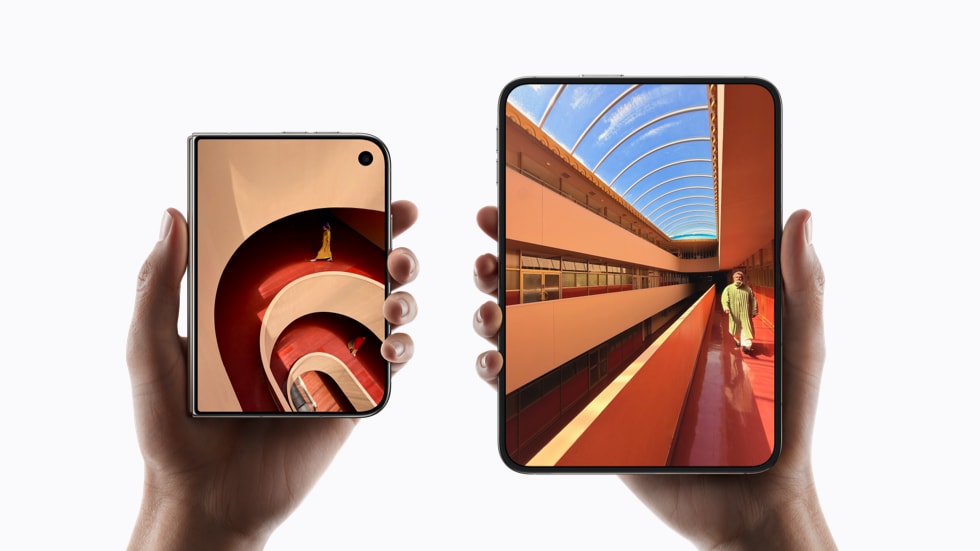
Duo is Apple’s first foldable iPhone and its largest iPhone display to date. The inner 7.6-inch Super Retina XDR panel is 50% larger than the iPhone 18 Pro Max display, while the 5.4-inch outer screen is designed for one-handed use. Both support ProMotion, Always On and up to 3,000 nits of outdoor brightness.
Apple uses grade 5 titanium, a hinge built from more than 100 components and an IP68 dust- and water-resistance rating. The inner display adds a nano-textured cover layer intended to reduce reflections and make the fold crease less visible.
Outer display: 5.4 inches
Inner display: 7.6 inches
Chip: A20 Pro
Authentication: Touch ID in the side button
SIM: eSIM-only worldwide
Pre-order: October 16
Available: October 23
The biggest difference is software, not the hinge
Apple has rebuilt parts of iOS 27 for the folding format. Open Duo and Split View can place two apps side by side; users can also open two windows of the same app and save app pairs. Apple says Netflix, Zoom and Slack are already adapting their interfaces to the larger screen.
This matters because foldables become much easier to justify when the second screen state changes what you can do rather than simply making one app larger.
There are trade-offs that look very un-Apple
Duo replaces Face ID with Touch ID in the side button. It is also eSIM-only worldwide, not just in selected markets. Those choices appear to free internal space and simplify authentication across open and closed positions, but they are meaningful changes for people who travel with physical SIM cards or strongly prefer Face ID.
Battery life also depends on how the phone is used. Apple rates up to 31 hours of video playback on the inner display, 44 hours on the outer display and up to 24 hours of mixed use across both displays.
The camera benefits from the form factor
The rear system combines a 48MP main camera and 48MP ultra wide. Folding creates several practical modes: the outer screen can act as a preview for the person being photographed, the higher-resolution rear cameras can be used for selfies, and the phone can prop itself up for hands-free video calls or longer recordings.
Those are more convincing uses of the hinge than novelty effects because they change how the device is physically positioned.
Who should seriously consider it?
You already carry an iPhone and small tablet for travel or work.
You frequently use split-screen workflows, reading, video or document review.
You value the larger display enough to accept a first-generation Apple form factor and $1,999 starting price.
Wait if:
You mostly use one app at a time.
Face ID or a physical SIM is important to you.
You want proven long-term hinge and inner-screen durability before paying flagship money.
The Living Index take
Apple arriving late may actually clarify the foldable market. Duo is not positioned as a cheaper way to get a large screen. It is a premium attempt to make one device cover more of the phone-plus-tablet workflow.
If that workflow fits your day, the $1,999 price can at least be evaluated against two devices. If it does not, the fold is an expensive design feature rather than a useful change in how you live with a phone.


댓글
댓글 쓰기